ServicesGrading
Grading in Mauldin
We shape your lot so water runs away from the house instead of toward it. That means a compacted, level building pad, the correct slope off the foundation, and swales that carry storm runoff where it belongs. One person on our side plans it and runs it.
What grading does for a lot
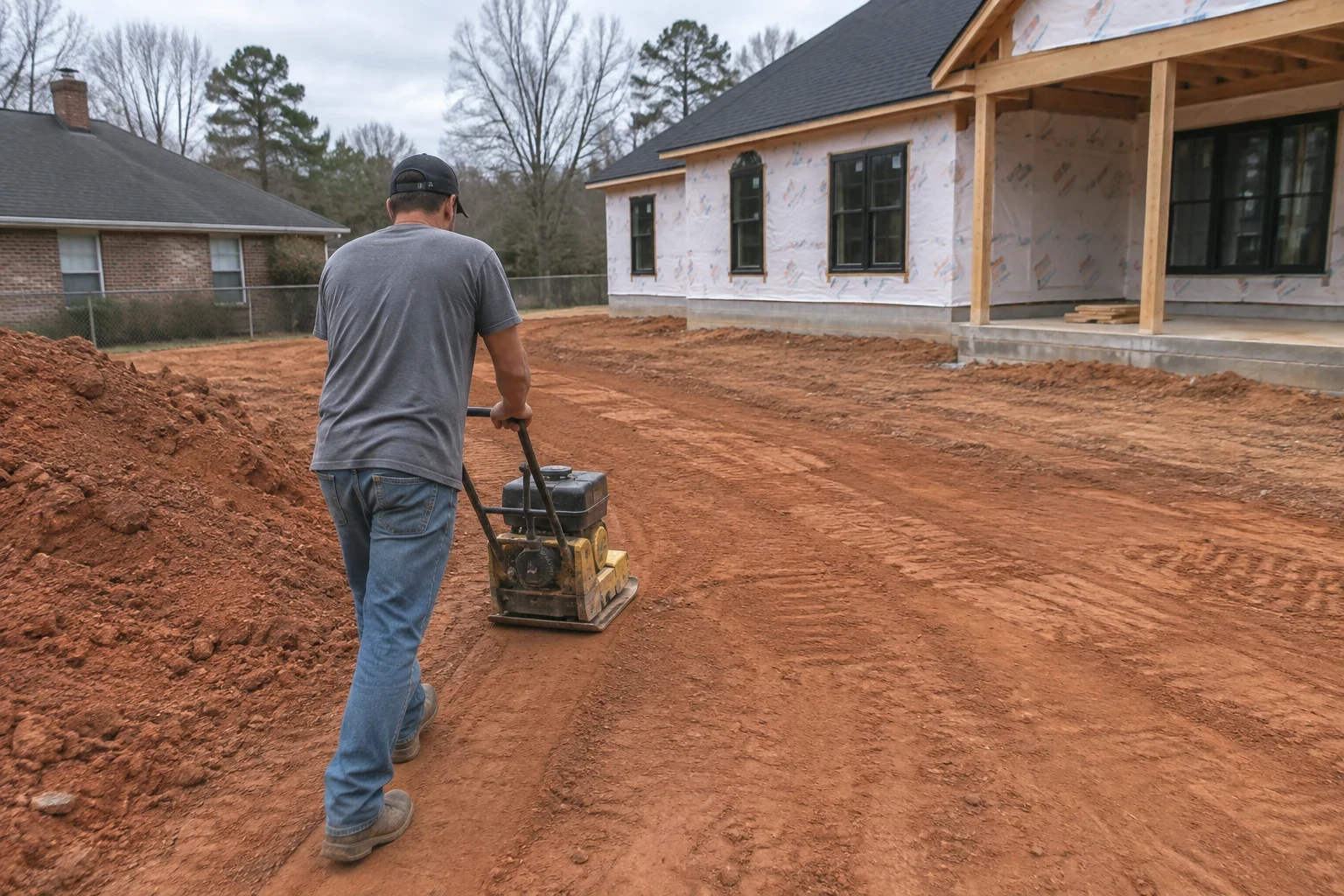
Grading is the work of cutting high spots, filling low ones and compacting the soil so the ground has the shape you need. On a new build, that means a firm, level pad for the foundation. On an existing home, it usually means fixing a slope that sends rain toward the walls or into the crawlspace.
The red clay common across the Upstate drains slowly and swells when wet, so small mistakes in slope show up fast as puddles, soggy crawlspaces and settling slabs. We set grades with a laser level, not by eye, and we place and compact fill a few inches at a time so it does not settle later.
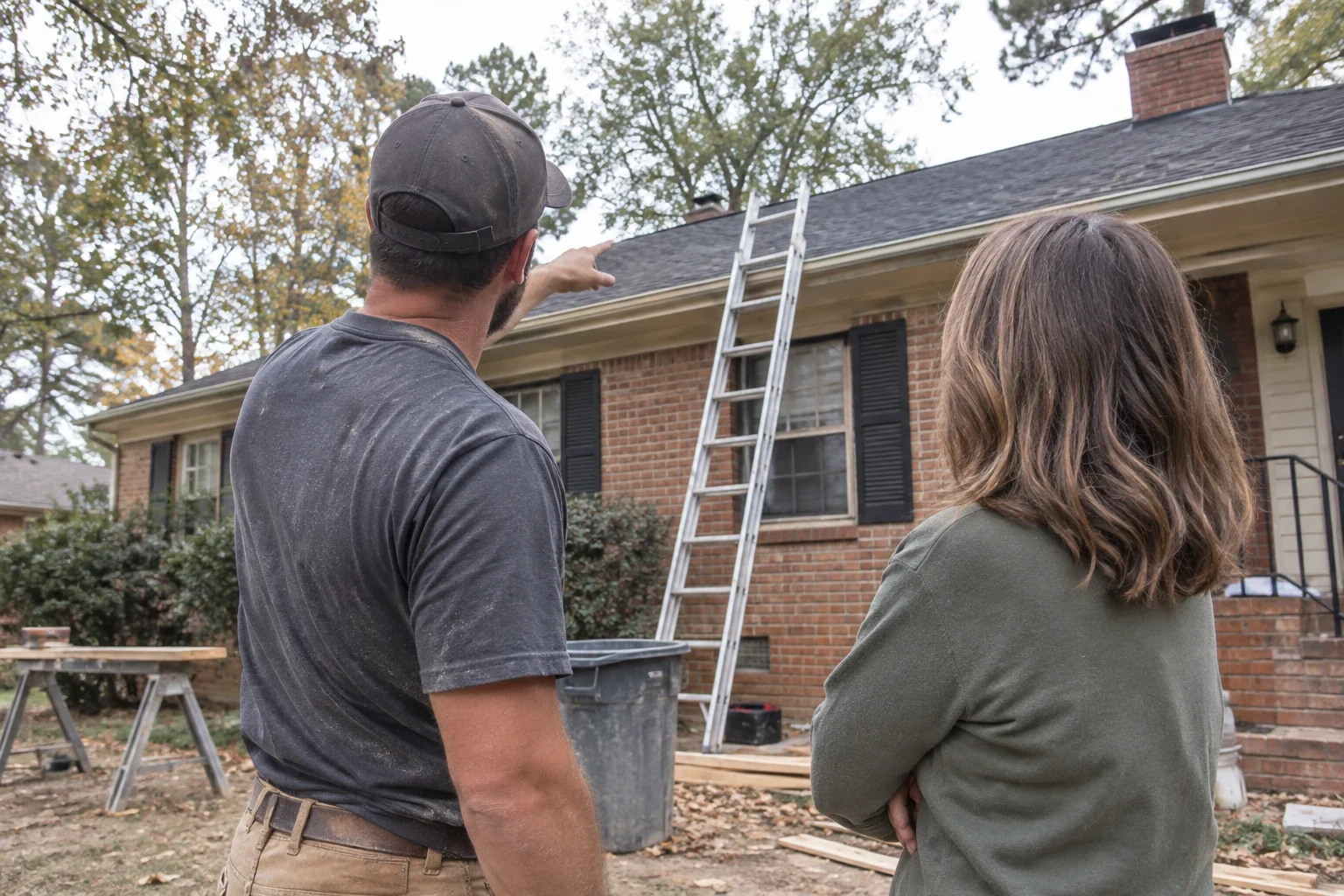
You deal with one contact from the first walk of the lot to final cleanup. That person schedules the equipment, coordinates with whoever handles land clearing or foundation work, and answers your questions as the job moves.
What our grading work includes
- 01
Rough grading
We cut and fill the site to its working elevations with a dozer or skid steer. This sets the general shape of the lot and the driveway path before any concrete is poured.
- 02
Building pad preparation
Fill under a slab or footing goes down in lifts of a few inches at a time, each one compacted. Loose fill dumped in one pass can settle for years and crack the slab above it.
- 03
Slope away from the foundation
Code calls for the ground to fall at least six inches within the first ten feet from the wall. We set that fall and check it with a level so roof water and surface runoff move away from the house.
- 04
Swales and drainage paths
A swale is a shallow, wide channel that carries water around the house and off the lot. We shape swales so they move water without cutting a ditch or eroding the soil.
- 05
Finish grading and topsoil
After construction traffic is done, we smooth the surface, spread topsoil and leave the yard ready for seed or sod.
- 06
Erosion control
Silt fence and other controls keep loose soil on your lot and out of the street and storm drains while the ground is bare.
Questions about Grading?
Call(864) 635-3076Signs your lot needs grading
Water standing near the walls
If puddles sit against the foundation for a day after rain, the ground is sloped the wrong way or has settled. That water ends up in the crawlspace or against the slab.
A damp or musty crawlspace
Moisture under the house often starts outside. Poor surface slope pushes water through the foundation vents and down the walls.
Washed-out mulch and soil
Channels cut through beds or bare streaks across the lawn show where runoff is concentrating. A swale gives that water a controlled path.
Soil sitting against the siding
Years of mulch and settling can raise the ground until it touches siding or the sill plate. That invites rot and insects into the framing.
A raw lot ready to build
Every new custom home needs the site graded before the foundation goes in. It is one of the first steps after the lot is cleared.
How a grading job runs
- 1
Site walk and measurements
We walk the lot with you, shoot elevations and note where water enters and leaves. We also look at the soil, existing trees, utilities and access for equipment.
- 2
Grading plan and written estimate
You get a plan that shows target elevations and drainage paths, with a line-item estimate. If the work disturbs enough ground to need a county land disturbance permit, we tell you and handle the paperwork.
- 3
Utility locates and setup
Before any digging, we have underground utilities located and marked. Silt fence goes up and we flag trees, septic areas or anything else the machines need to avoid.
- 4
Cut, fill and compact
The crew moves soil to the planned grades and compacts each thin layer of fill before the next one goes down. Your contact checks elevations during the work, not just at the end.
- 5
Finish grade and cleanup
We set final slopes, spread topsoil, clear mud from the driveway and street, and walk the lot with you before we leave.
What affects the cost of grading
Grading is priced from the amount of soil that moves and how hard it is to move. We give you a written estimate after the site walk, with each part of the work listed separately so you can see where the money goes.
- Volume of cut and fill
- Leveling a sloped lot for a building pad can mean moving hundreds of cubic yards. A yard that only needs its slope corrected moves far less.
- Imported or hauled soil
- If the lot does not balance, we either truck in fill and topsoil or haul extra material away. Trucking is often a large share of the bill.
- Access and site conditions
- Tight side yards, fences and mature trees limit what equipment fits. Smaller machines work slower, and rock or wet clay adds time.
- Drainage features and permits
- Swales, erosion control and any required permit add cost. We list each one so nothing shows up unannounced.
Grading questions we hear
Can you grade my yard without tearing up the whole lawn?
Often, yes. If the problem is limited to the ground near the foundation or one drainage path, we work only that area and leave the rest alone. We will show you the boundaries of the disturbed area before we start.
How long does grading take?
A yard correction usually takes a day or two of machine time. A full building pad on a new lot can take longer, mostly depending on how much soil moves and the weather. Wet clay cannot be compacted properly, so we wait for it to dry rather than push through.
Do I need grading before you pour a foundation?
Yes. The pad has to be at the right elevation and compacted before footings are dug. Because we also handle land clearing and foundation work, one contact keeps those steps in order so nothing gets poured on soft ground.
Will grading fix water in my crawlspace?
It fixes the most common cause, which is surface water running toward the house. If water is coming from groundwater or a failed gutter, grading alone will not solve it, and we will tell you that at the site walk.
What happens to the soil you remove?
Good soil gets reused somewhere else on your lot whenever it fits the plan. Anything left over is hauled off, and that cost is shown on your estimate.
Get your lot sloped and ready
Tell us what the ground is doing after a rain or what you plan to build. We will walk the lot, explain what grading it needs, and you will have one person to call from start to finish.