ServicesLand Clearing
Land Clearing in Mauldin
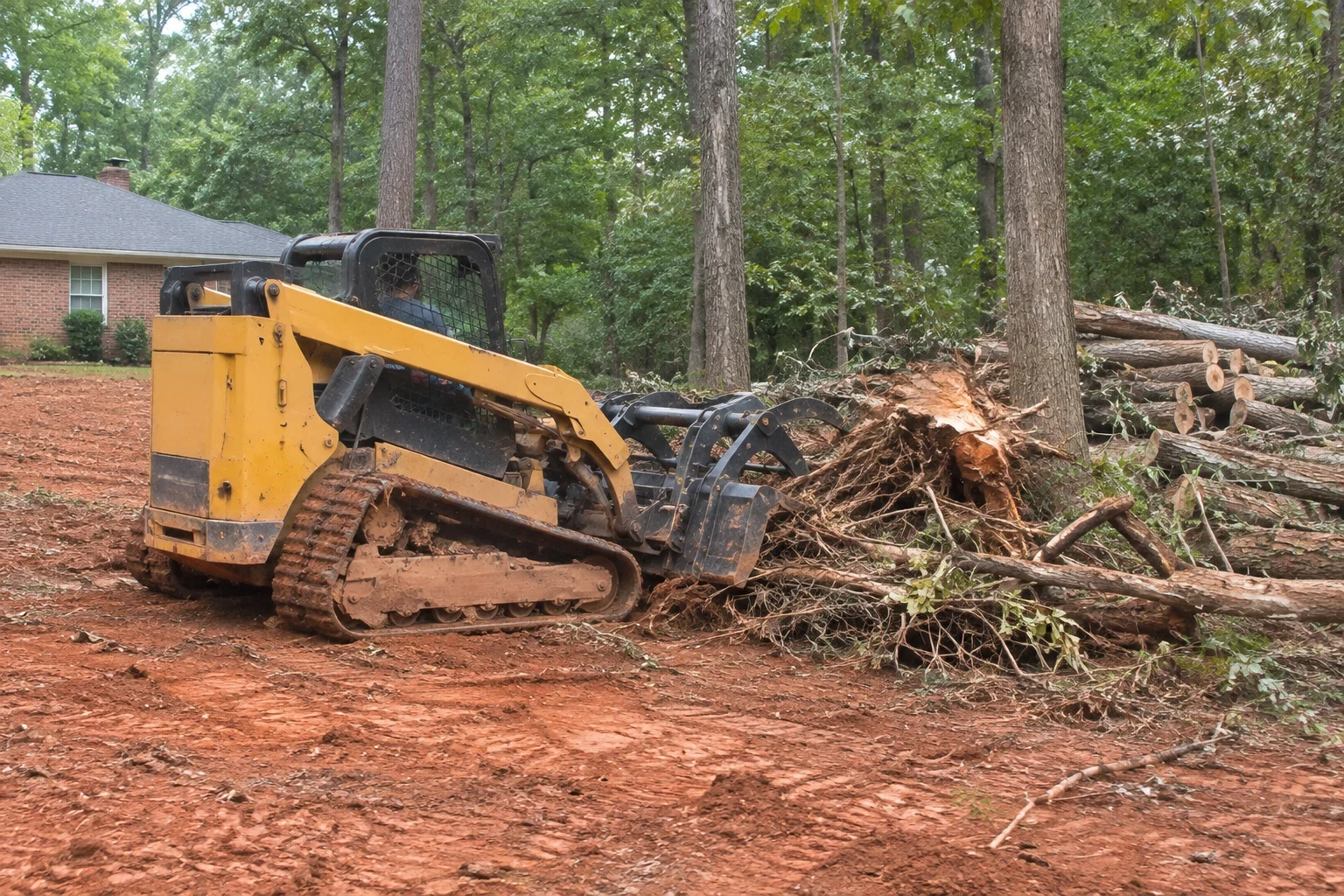
We clear the part of your lot that the build actually needs: trees, stumps, root mass and brush out of the house footprint, driveway and work area. Keeper trees stay protected. One person walks the lot with you, schedules the crew and follows the job through to grading.
Clearing that starts from the floor plan
Land clearing is the first physical step of a custom home build or a large addition. Before anyone sets forms or digs footings, the ground under the house has to be free of trees, stumps and the organic material around their roots. Wood and roots left in the soil rot over the years, the soil above them drops, and a slab or footing resting on that soil can crack.
We clear to a plan, not to the property line. The house footprint, a working margin around it, the driveway path and the utility routes come out. Trees outside that envelope that are healthy and well placed can stay, and we fence their root zones so equipment does not compact the soil above them.
Because the same person who quotes your clearing also coordinates the grading and foundation work, the cleared area matches what the next crews need. You are not passing measurements between three companies and hoping they agree.
What our land clearing covers
Tree felling and removal
We drop trees in the build area in a controlled direction, away from structures, lines and the trees you are keeping. Trunks are cut to length and removed or processed on site.
Stump and root extraction
Inside the footprint and driveway, stumps come out with their main roots instead of being ground flush. Grinding leaves a root ball below grade that decomposes and settles later, which is acceptable in a lawn but not under a foundation.
Brush and understory removal
Privet, briars, vines and small saplings are cleared or mulched so the surveyor, soil tester and grading crew can see and reach the ground.
Debris handling
Logs, limbs and stumps are hauled off or chipped, depending on the lot and what you want. Mulch can be spread in areas that will stay wooded.
Protection for keeper trees
We mark trees to save and set fencing at the edge of their root zones. Most tree loss after construction comes from soil compaction and cut roots, not from the trunk being hit.
Basic erosion control
Silt fence goes in along the downhill edges where the cleared soil could wash. Bare Upstate clay moves fast in a heavy summer storm, and keeping it on your lot keeps neighbors and inspectors satisfied.
When your lot needs clearing
Trees stand where the house will go
If your floor plan lands on a wooded section, those trees and their root systems need to come out before excavation can start.
Nobody can walk the lot
Thick understory keeps surveyors from setting stakes and makes it hard to judge slope. Clearing brush first gives everyone an honest look at the ground.
Old stumps in the footprint
Stumps left from earlier logging or storm cleanup are still decomposing. They need to be pulled and the hole backfilled with compacted soil.
Dead or leaning trees near the build
A tree with a split trunk, heavy lean or dead crown close to the planned house is a hazard during construction and after. It is cheaper to remove it now, while equipment is on site.
An addition is planned into the yard
Additions often reach toward existing trees. We look at how much of the root zone the new foundation will cut and tell you plainly whether the tree is likely to survive.
How a clearing job runs
- 1
Walk the lot together
We walk the property with your plat or floor plan, flag the build envelope and mark the trees you want to keep. This is where you tell us about views, privacy screens and shade you care about.
- 2
Plan, permits and access
We confirm whether the disturbed area needs a land disturbance permit and what erosion measures apply. We also set the entrance so trucks do not track clay onto the road.
- 3
Cut, remove and process
Crews fell and buck trees, clear brush and haul or chip debris. Keeper trees are fenced before the heavy equipment moves.
- 4
Pull stumps and roots
Stumps in the footprint and driveway come out with their main roots. Holes are backfilled so the grading crew starts from sound, even ground.
- 5
Hand off to grading
Your contact stays the same as the job moves into grading and foundation work, so the cleared pad, drainage plan and footing layout line up.
What moves the cost of land clearing
Clearing is priced from the lot itself, so we give you a number after we have walked it. Your estimate shows clearing, stump work and debris handling as separate lines so you can see where the money goes.
- Area and tree density
- A half acre of scattered pines and a half acre of dense mixed hardwood are very different jobs. Count and size of trees matter more than acreage alone.
- Stump treatment
- Pulling stumps with roots takes more time and machine work than grinding. We pull where structures go and can grind where only lawn will be.
- Debris disposal
- Hauling logs and stumps off site costs more than chipping and spreading mulch on the lot. Many owners choose a mix.
- Slope and access
- Steep ground, soft soil after rain and tight entrances slow equipment and can call for smaller machines.
- Permits and erosion control
- Larger disturbed areas need permitting, silt fence and sometimes a construction entrance, which adds materials and inspection steps.
Land clearing questions
Something not covered here? (864) 635-3076
Do I need a permit to clear my lot?
It depends on how much ground is disturbed and where the lot sits. Larger clearing usually falls under county stormwater and land disturbance rules. We check that before work starts and handle the erosion control the permit requires.
Can you leave some trees standing?
Yes. We mark keeper trees on the walk-through and fence their root zones. If a tree sits so close to the planned foundation that losing roots will likely kill it, we tell you before we start rather than after it declines.
Why not just grind the stumps?
Grinding removes the visible stump but leaves the root mass in the soil. As it rots, the ground above it settles, which can crack a slab or shift a footing. Under structures and driveways we pull stumps; in future lawn areas grinding is usually fine.
What happens to the wood?
Logs and stumps can be hauled away, or limbs and brush can be chipped into mulch and spread in wooded areas you are keeping. We talk through the options and their cost at the consultation.
How long does clearing take?
A typical residential build area takes a few working days, though dense hardwood, steep slopes or wet clay can stretch that. We schedule around rain so equipment does not rut the soil you are about to build on.
Start with a walk of your lot
Tell us where the house or addition will sit and which trees matter to you. We will lay out what has to come out and how the clearing feeds into grading and foundation work.