ServicesSiding Installation
Siding Installation in Mauldin
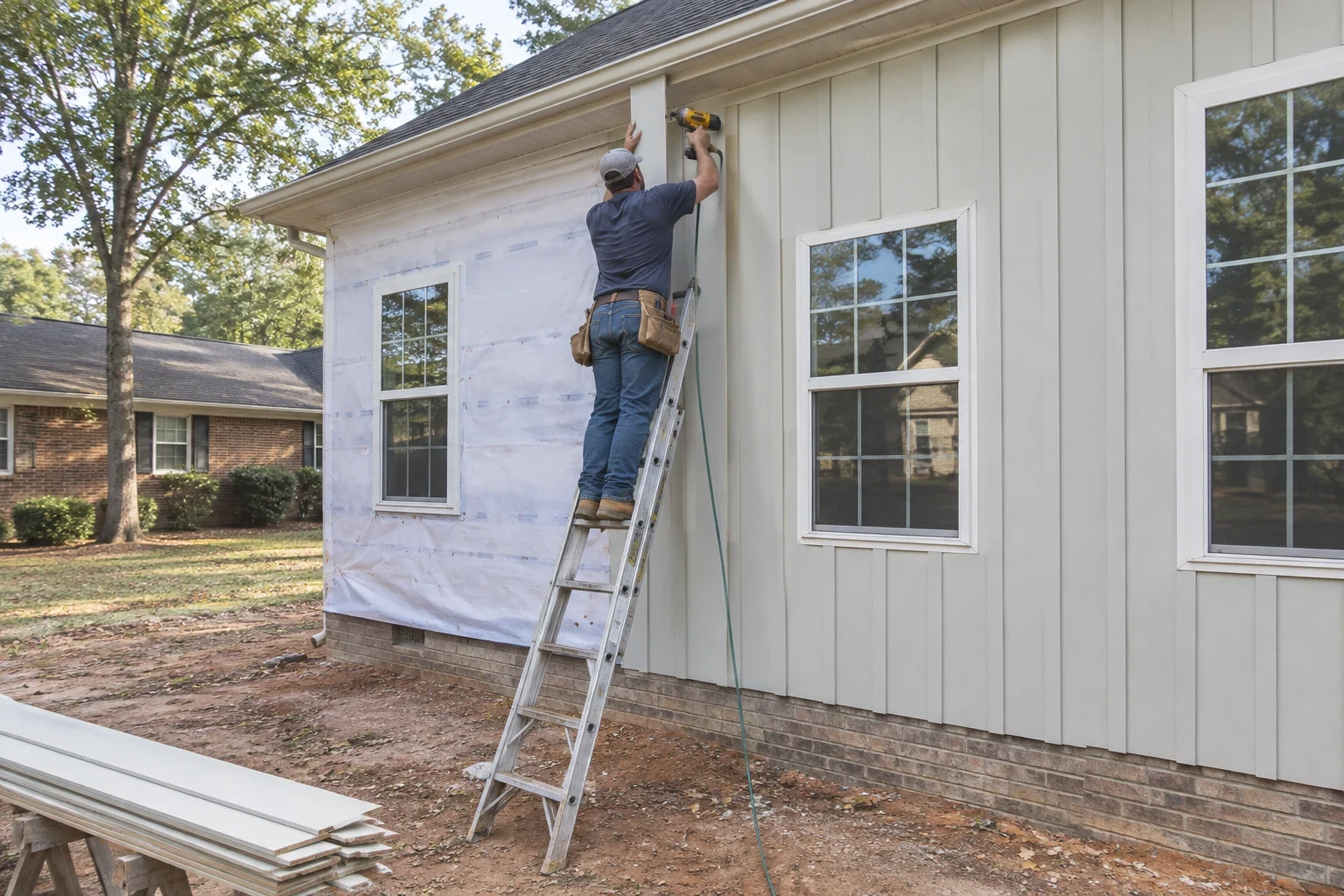
We strip old siding down to the sheathing, repair what has rotted, then install vinyl, fiber cement or engineered wood with the flashing and clearances each product needs. One person runs your job from the first walkaround to the last nail pickup, so you always know who to ask.
What New Siding Has to Do
Siding is the outer layer of a wall system. Behind it sit the weather-resistive barrier, the sheathing and the framing, and its real job is to shed water before it reaches any of them. Most siding failures we see start at the details: a missing kickout flashing where a roof meets a wall, a window with no head flashing, or boards run tight to the soil.
Many homes around Mauldin built in the 1980s and 1990s still wear hardboard lap siding, which swells and softens once water gets past the paint at the drip edges. Replacing it is the right call when the damage is spread across walls rather than limited to a few boards.
Your estimate, material choice, crew schedule and final walkthrough all go through the same person. If you are also planning an addition, our Home Remodeling work and the new siding can be scheduled together so the new and old walls match.
What a Siding Job Includes
Tear-off and disposal
We remove the old siding, trim and fasteners down to the sheathing and haul everything away. Tarps go down along the foundation to catch nails and debris before they reach your beds.
Sheathing inspection and repair
Once the walls are open, we probe the OSB or plywood for soft spots, especially below windows and at inside corners. Rotted sections are cut out to the nearest framing and replaced, and we photograph what we find so you can see it.
House wrap and flashing
A new weather-resistive barrier is lapped shingle-style so water runs outward. Windows get sill pans and head flashing, and every roof-to-wall intersection gets a kickout flashing to throw water into the gutter instead of down the wall.
Siding and trim installation
Vinyl is hung loose on its nailing slots so it can expand in summer heat without buckling. Fiber cement is blind-nailed with the gaps and clearances its maker specifies, typically held up off the grade and off roof surfaces so the cut edges stay dry.
Sealing, paint and cleanup
We caulk where the product calls for it, not everywhere, since over-caulked joints trap water. Fiber cement and engineered wood get finished as specified, and we sweep the yard with a magnet before we leave.
Signs Your Siding Needs Replacing
- Swollen or flaking board edges
- Hardboard and older wood siding absorb water at the bottom edges and butt joints. Once the edges mushroom or crumble, paint will not hold and the damage keeps spreading.
- Soft spots when you press the wall
- A wall that gives under your thumb usually means the sheathing behind it is wet or rotted. That needs to be opened up, not painted over.
- Stains below roof lines and windows
- Dark streaks running down from where a roof meets a wall often point to missing kickout flashing. Water has been getting behind the siding at that spot for a while.
- Warped, cracked or loose vinyl
- Vinyl that ripples or pops off the wall was often nailed too tight to move with temperature swings. Cracked panels let rain straight onto the house wrap.
- Mildew that comes back fast
- Green growth on shaded north walls can return within weeks of washing when the cladding stays damp. A siding with a better drainage gap and a harder surface dries faster.
How Your Siding Project Runs
- 1
Phone consultation and walkaround
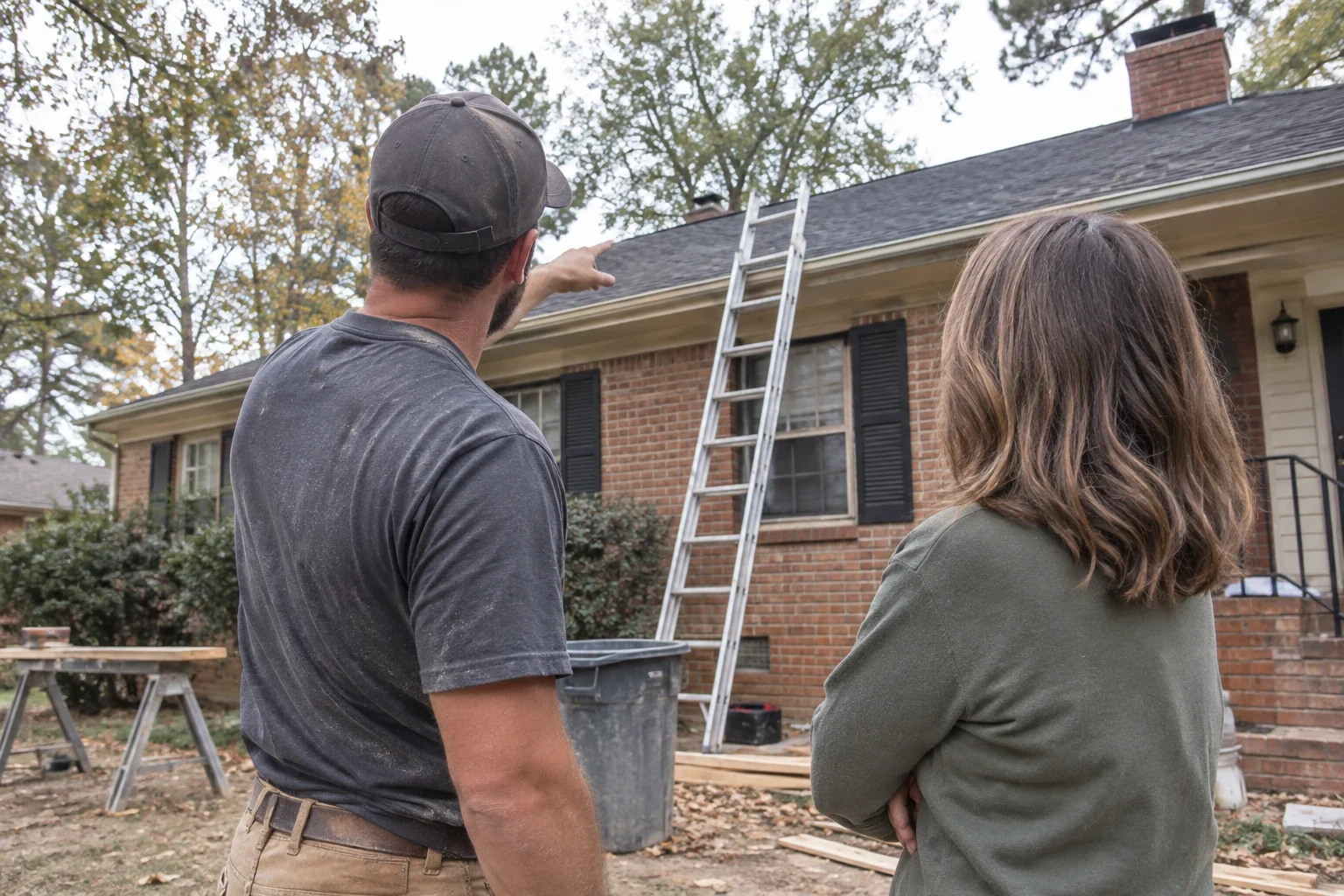
You call and we talk through the house, the material you are considering and your timing. Then we walk every wall with you, measure, and note flashing problems, grade clearance and any trim that needs replacing.
- 2
Written estimate and material choice
Your estimate lists tear-off, sheathing allowance, wrap, flashing, siding, trim and finish as separate lines. We explain how vinyl, fiber cement and engineered wood differ in weight, upkeep and how they handle impact and moisture.
- 3
Permit and scheduling
We check whether your town or the county requires a permit for residing and pull it when it does. Materials are ordered and delivered before the crew starts, so walls are never left open waiting on a shipment.
- 4
Wall-by-wall installation
We open, repair, wrap and re-side one elevation at a time, so no side of your house sits exposed overnight. Your contact checks the flashing on each wall before siding covers it.
- 5
Final walkthrough
We walk the house with you, fix anything you flag and confirm the yard is clear of nails and offcuts.
What Drives the Price of New Siding
Siding is priced by the square footage of wall, but that number only starts the conversation. The material, the shape of the house and what we find under the old siding move the total more than anything else. Your estimate shows each of these as its own line so nothing appears late.
- Material and profile
- Vinyl is lighter and faster to hang than fiber cement, which needs special cutting tools, more labor and paint. Shingle and board-and-batten profiles take longer than standard lap.
- Condition of the sheathing
- Rotted sheathing is the main unknown. We include an allowance for it, show you photos of any damage, and talk with you before replacing more than the allowance covers.
- Wall height and complexity
- Two-story walls need staging or lifts, and gables, dormers and bay windows add cuts and flashing details. A simple ranch goes faster than a house with many corners.
- Trim, windows and extras
- New corner boards, window and door trim, soffit and fascia add material and time. So does correcting flashing at every window and roof line.
Siding Installation Questions
- Can you install new siding over my old siding?
- We generally do not. Covering old siding hides any rot in the sheathing and leaves no way to install proper window and roof flashing. Tearing off lets us see the wall, fix it and build a correct water barrier.
- Should I choose vinyl or fiber cement?
- Vinyl costs less to install, never needs paint and moves with heat, so it has to be hung loose. Fiber cement is heavier, resists impact and dents better, and holds paint well, but it needs repainting over time. We will lay out the tradeoffs for your house during the consultation.
- How long does a typical siding job take?
- A single-story house with straightforward walls often takes a few working days once the crew starts. Two-story homes, heavy sheathing repair and rain delays stretch that out. We give you a schedule with the estimate and update you if weather moves it.
- Do I need to be home during the work?
- No, the work is all outside. We do ask that you move cars, grills and patio furniture away from the walls and keep pets inside. Window coverings near the work may rattle when we nail, so take down anything fragile hanging on exterior walls.
- What happens if you find rot behind the siding?
- We stop, photograph it and show you. Small areas covered by the allowance are repaired and the work continues. If the damage reaches framing or goes beyond the allowance, we explain the repair and its cost before doing it.
Start With a Walk Around Your Walls
Tell us about the siding you have and the look you want. We will walk the house, check the flashing and sheathing, and give you a written estimate from the same person who will run the job.